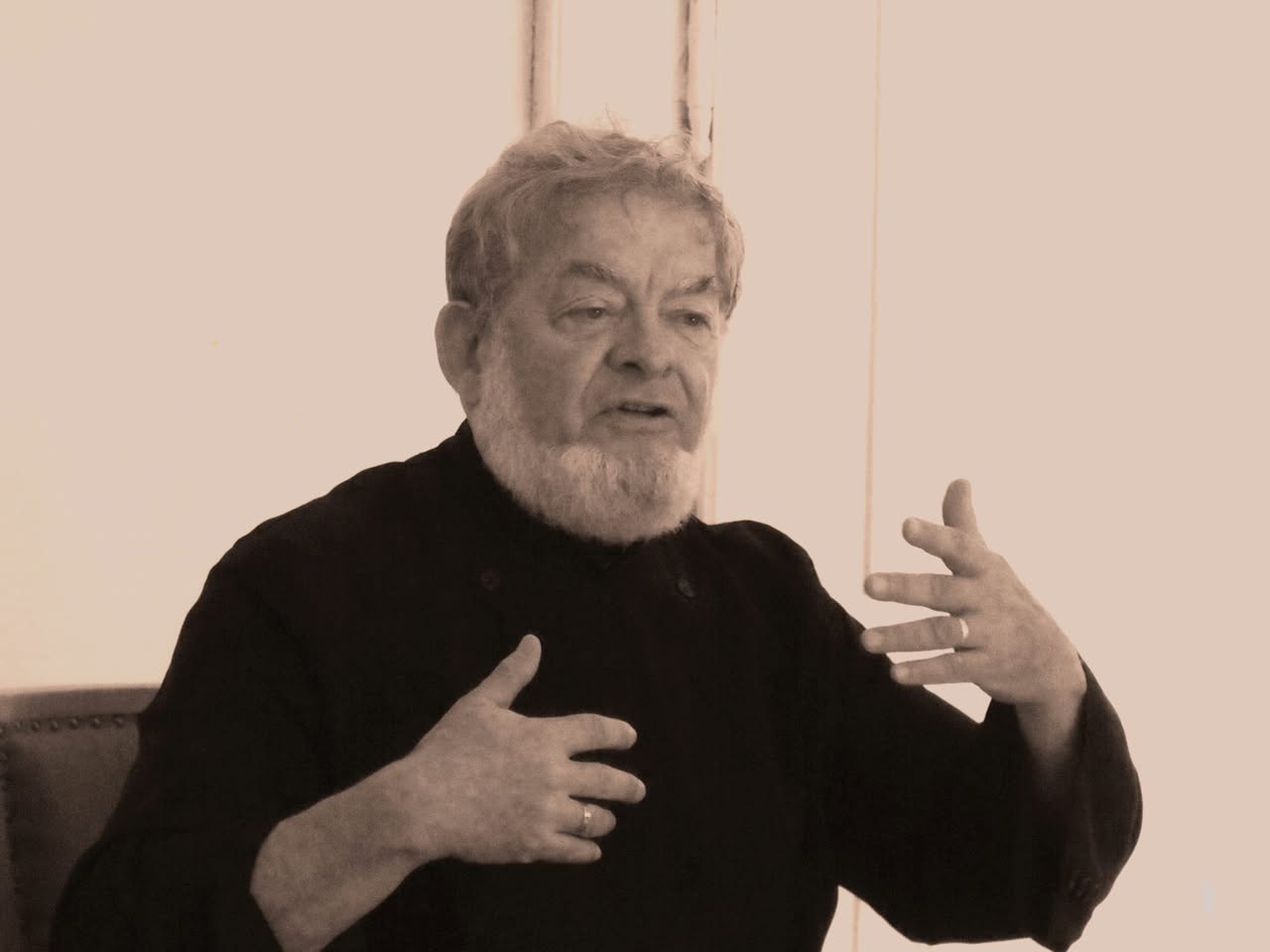
In unserer TUNE IN-Reihe zum Thema «Schönheit» lassen wir einen orthodoxen Theologen zu Wort kommen: Prof. em. Dorin Oancea aus Sibiu / Herrmannstadt (Romania)
Frage: Die Legende besagt, dass der Fürst Wladmir von Kiew am Ende des 10.Jahrhunderts Emissäre in die Gebiete absandte, in denen die grossen Religionen (Islam, West- und Ostchristentum) ihren Sitz hatten. Aus Byzanz kehrten die Gesandten mit überwältigenden Eindrücken aus dem Gottesdienst zurück. Sie hätten nicht gewusst, ob sie „im Himmel oder auf Erden gewesen seien, denn auf Erden ist eine derartige Pracht nicht anzutreffen.” Dieser Bericht hatte, so heisst es, die Bekehrung des Fürsten zur Folge. Diese Legende spricht von der Schönheit der orthodoxen Liturgie. Wenn „Schönheit” ein zentrales Merkmal des Gottesdienstes ist: welche Funktion und Wirkung hat sie?
Dorin Oancea: Die angesprochene Legende spricht sicherlich von der Erfahrung unmitelbarer Schönheit eines Gottesdienstes in einem entsprechend schönen Gotteshaus, der Hagia Sophia. Diese wahrnehmbare Schönheit hat auch eine verborgene Kehrseite, die nur im Geiste zugänglich ist. Der orthodoxe Gottesdienst möchte die Begegnung des Göttlichen mit dem Menschlich-Weltlichen ermöglichen – und zwar in Kategorien, die dem Menschen zugänglich sind. Die Schönheit des Kirchengebäudes und der Liturgie als solche soll also zunächst auf den gnadenreichen Gott hinweisen, der sich uns zuwendet.
“Die Schönheit soll zunächst auf den gnadenreichen Gott hinweisen”
Andererseits steht die Schönheit für die Bereitschaft des Menschen, diese göttliche Anfrage und Zuwendung in der höchsten – in dieser Welt zugänglichen – Form zu beantworten . Das Schöne bezieht sich also auf die Gemeinschaft zwischen Gott und Mensch, so wie sie emblematisch, vorbildhaft, in Christus vollzogen wurde. Deswegen ist die Christus-Ikone zentral für alle orthodoxe Schönheitserfahrung. Die Schönheit der orthodoxen Liturgie hat also die Funktion, die Gemeinschaft Gottes mit dem Menschen – durch die Gemeinschaft mit dem Herrn Jesus Christus im Heiligen Geist – zu verwirklichen. Dem entspricht auch die Wirkung: Sie zielt auf eine zunehmend vertiefte Begegnung des Menschen mit Gott und mit den Mitmenschen, mit der Welt.
Was bedeutet es, dass das Glaubensbekenntnis, anders als in den Westkirchen, nicht gesprochen, sondern gesungen wird?
Dorin Oancea: Sie liegen falsch. Zumindest in meiner orthodoxen Tradition wird das Credo nicht gesungen, sondern gesprochen – und zwar von der ganzen Gemeinde, begleitet vom Pfarrer, einem Kurator oder einem anderen Gläubigen. Damit soll der Inhalt des Bekenntnisses unmittelbar vor der Wandlung der Gaben, vor dem Gebet zum Vater und vor der Kommunion voll zur Geltung kommen. Diese letzteren erfolgen also nicht in einem geistlich luftleeren Raum sondern innerhalb eines umfassenden Geschehens, zu dem man sich offen und ganz nüchtern bekennt. Es gibt aber andere Bekenntnisse während des Gottesdienstes, die gesungen werden. Sie sprechen mit ihrer Frage wohl darauf an. Zum Beispiel werden vor dem Friedenskuß die Gläubigen zur gegenseitigen Liebe aufgefordert, damit sie gemeinsam das Bekenntnis sprechen können. Dies läuft folgendermassen ab:
Der Pfarrer: “Lasset uns einander lieben, damit wir eines Sinnes bekennen.” Gemeinde: “Den Vater, den Sohn und den Heiligen Geist, die wesensgleiche und unteilbare Dreieinigkeit.”
Dieses Bekenntnis zur Heiligen Dreifaltigkeit wird vom ganzen Volk oder von den Kantoren gesungen.
Der orthodoxe Gottesdienst in seiner wahrhaft königlichen Pracht ist entstehungsgeschichtlich vom Hofzeremoniell am Kaiserhof beeinflusst. Dies würde erklären, weshalb er prunkvoller ist als jener der römisch-katholischen Kirche, geschweige denn der protestantischen Kirchen. „Schönheit” wäre demnach in der orthodoxen Kirche von einer bestimmten geschichtlichen Epoche beeinflusst. Gibt es da noch Freiraum für moderne ästhetische Formen? Gibt es wenigstens ansatzweise eine ästhetische Freiheit in der Musik, in der Ikonenmalerei oder in der liturgischen Dichtung?
Dorin Oancea: Das Gotteshaus und der darin stattfindende Gottesdienst werden von den Gläubigen als Schnittpunkt des Göttlichen mit dem Menschlichen empfunden, als Zugänge zur erfahrbaren Gemeinschaft Gottes mit dem Menschen. Dieser Funktion dienen sowohl die innere Malereiausstattung als auch die Priestergewänder. Deren goldener Schmuck soll zum Beispiel nicht weltlichen Prunk, sondern die Unmittelbarkeit der göttlichen und an sich nicht darstellbaren Gnade ausdrücken und sie erfahrbar machen. Dieses Verständnis des Gottesdienstes hat sich im Laufe eines Jahrtausends entwickelt. Die damals existierenden Mittel des kaiserlichen Hofzeremonials wurden gebraucht, um die erwähnte Gemeinschaft erfahrbar zu machen. Die so entstandenen symbolischen Formen sind auch für den heutigen Gläubigen zugänglich, sofern sie ihm immer wieder erschlossen werden. Das stellt eine bleibende Aufgabe eines jeden Gemeindepfarrers dar und sie wird von den meisten Pfarrern denn auch wahrgenommen. Jedenfalls zeugt das Bekenntnis der überwältigenden Mehrheit der Bevölkerung Rumäniens zur orthodoxen Kirche davon. Andererseits besteht eine gewisse Spannung zwischen zwei Meinungen: Auf der einen Seite steht die Überzeugung, daß nur bestimmte ästhetische Gestaltungen im Gottesdienst die erfahrbare Gemeinschaft mit Gott ermöglichen – und auf der anderen Seite die Meinung, daß auch zeitangepaßte Formen dieselbe Funktion haben könnten. Diese zweite Meinung respektiert allerdings auch die komplementäre Doppeltorientierung des Symbols, zum Beispiel der Ikone. Ich persönlich befürworte die zweite Ausrichtung, ohne den rein künstlerischen Wert mancher neubyzantinischen Malereien zu verkennen….
Neubyzantinisch, wie wir sie von den alten Ikonen her kennen?
Dorin Oancea: Richtig. Ich befürchte also, daß gerade das unbedingte Festhalten an tradierten ästhetischen Formen allzu leicht zu Fundamentalismen führt, die mit dem orthodoxen Glaubensverständnis nichts gemeinsam haben.
Der Text stammt aus der Zeitschrift Crescendo zum Thema «Schönheit», Nr. 82 2010
Fragen: Beat Rink
ENGLISH
In our TUNE IN series on the subject of «beauty» let us hear from an Orthodox theologian: Prof. em. Dorin Oancea from Sibiu (also known as Herrmannstadt) in Romania.
Question: According to the legend, Prince Vladimir of Kiev sent emissaries in the 10th century into the areas in which the major religions (Islam and the Western and Eastern churches) were based. From Byzantium, the ambassadors returned with overpowering impressions of the church services. They did not know whether they “had been in heaven or on earth, for magnificence of this kind is not to be met with on earth.” This report is said to have resulted in the Prince’s conversion. This legend speaks of the beauty of the Orthodox liturgy. If “beauty” is a central characteristic of the church service, what is its function and effect?
Dorin Oancea: The legend here is certainly referring to a direct experience of beauty in a service in a correspondingly beautiful house of God, the Hagia Sophia. This perceptible beauty also has a hidden other side which is accessible only to the spirit. The intention of the Orthodox service is to enable the meeting of the divine with the human and earthly – making use of the categories familiar to man. The primary purpose of the beauty of the church building and the liturgy as such is to point to our God and the richness of the grace with which He turns to us. At the same time, this beauty represents the readiness of man to respond, in the highest form available in this world, to God’s directing his gaze towards us.
“The icon of Christ is central to all Orthodox experience of beauty”
The beauty therefore relates to the fellowship between God and man as perfected emblematically and exemplarily in Christ. For this reason, the icon of Christ is central to all Orthodox experience of beauty. The beauty of the Orthodox liturgy also has the function of realising fellowship of God with mankind – through fellowship in the Lord Jesus Christ. The effect is therefore in keeping with this: it aims at an increasingly deep encounter of the individual with God and with his fellow human beings, with the world.
What significance does it have that the Confession of Faith is sung, as opposed to being spoken as in the Western churches?
Dorin Oancea: This is a misunderstanding. In my Orthodox tradition, at least, the Credo is not sung, but spoken – quite specifically by the entire congregation, accompanied by the pastor, a supervisor or another believer. In this way, the content of the Confession of Faith should exercise its effect immediately before the transubstantiation of the gifts, before the prayer to the Father and before the Communion. The latter therefore take place not in a spiritually undefined space, but within a comprehensive framework in which one confesses one’s faith openly and completely unemotionally. There are other statements of faith which are in fact sung, and this is probably what your question is aiming at. Before the kiss of peace, for example, the faithful are called to express mutual love so that they can be united in stating their faith. This goes as follows.
The pastor: “Let us love one another, so that we can be of one accord in our confession of faith.”
Congregation: “The Father, the Son and the Holy Spirit, the Trinity of one indivisible nature.”
This statement of faith in the Holy Trinity is sung by the whole congregation or by the cantors.
“The golden ornaments express the immediate presence of God and His grace”
The Orthodox service in its truly royal magnificence was influenced by ceremony at the Imperial court. This would explain why it is more splendid than that of the Roman Catholic church, leaving of course the Protestant church out of the comparison completely. From this point of view, “beauty” in the Orthodox church is to be seen as the result of influence from a particular historical epoch. Is there any room here for modern aesthetic forms? Are there at least some signs of aesthetic freedom in music, in icon painting or in liturgical poesy?
Dorin Oancea: The house of God and the services taking place there are seen by the believers as the intersection of the divine and the human, as a means of access to an experience of fellowship between God and mankind. This function is supported by both the painting of the interior and the priests’ garments. Their golden ornaments, for example, are intended to express not worldly splendour, but the immediate presence of God and His grace, which cannot in fact be depicted, and to make it tangible. This view of the service developed in the course of a thousand years. The means available at the Imperial court at that time were used to make the fellowship we have already referred to tangible.
The symbolic forms which developed this way are still accessible to the believer today, as long as it is explained to him again from time to time. This is a constant task for every local priest, and it is also conscientiously carried out by most of them. The confession of the Orthodox faith by the overwhelming majority of the Romanian population is evidence of this. At the same time, a certain tension can be observed between two views: on the one hand, there is the conviction that only certain aesthetic procedures in the church service make tangible fellowship with God possible – while, on the other hand, there is the view that forms adapted to our times could have the same function. This second view, however, likewise respects the complementary, double significance of the symbol – of the icons, for example. Personally, I favour the second approach, but without failing to appreciate the pure artistic value of many neo-Byzantine paintings…
Neo-Byzantine, in the form we know from the old icons?
Dorin Oancea: That’s right. My fear is therefore that an unquestioning holding onto traditional aesthetic forms can all too easily lead to forms of fundamentalism which have nothing to do with the Orthodox understanding of faith.
This text is taken from the Crescendo magazine on the topic of «beauty», No. 82 2010
Questions: Beat Rink / Translation: Bill Buchanan